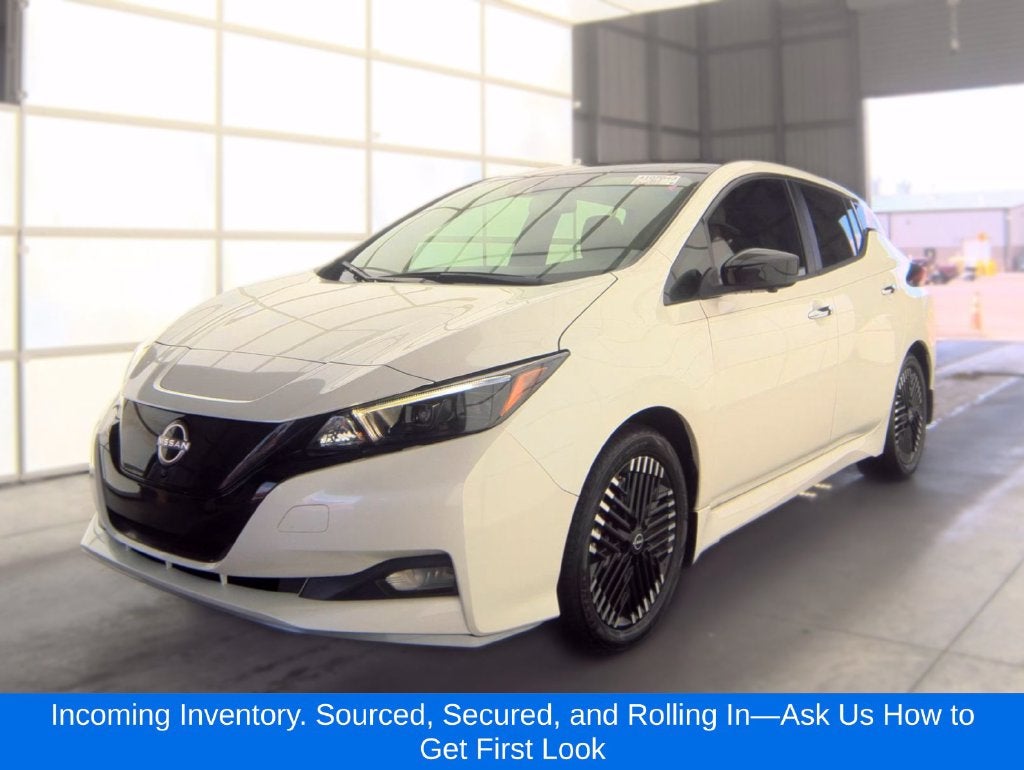
 1 / 5
1 / 5Recently sold
10 sales, $19,694–$24,749
- 2024SV17,298 mi$20,595Jul 2026
- 2023SV12,935 mi$24,531Jul 2026
- 2024SV12,541 mi$24,249Jul 2026
- 2024SV7,611 mi$24,749Jul 2026
- 2024SV26,613 mi$20,790Jul 2026
- 2023SV14,789 mi$19,694Jul 2026
- 2024SV23,658 mi$24,363Jul 2026
- 2024SV15,472 mi$22,664Jul 2026
- 2025SV5,976 mi$23,750Jul 2026
- 2024SV23,260 mi$22,998Jul 2026
Market trends
Voltcheck ProLeaf SV Plus
Battery & range
- High energy density — good range for the weight
- Holds range better than LFP in the cold
- Strong all-round power delivery
- Wears faster than LFP over many charge cycles
- Best kept to ~80–90% for daily charging
- Contains cobalt (higher cost, sourcing concerns)
Charging
Warranty
Dealer description
This 2023 Nissan Leaf SV Plus brings electric efficiency and modern convenience to every drive. With just over 16,000 miles, this black hatchback delivers impressive fuel economy at 121 MPGe in the city and 98 MPGe on the highway, making it an excellent choice for eco-conscious drivers. The SV Plus trim offers a well-appointed interior with premium comfort and technology features designed for today's connected driver. - 2-Tone Premium Paint - NissanConnect EV Navigation with Apple CarPlay and Android Auto - Heated Front Bucket Seats with heated steering wheel - Rear Parking Sensors with Electronic Stability Control - 17 Machined Finish Aluminum Alloy Wheels - SiriusXM Satellite Radio with Siri Eyes Free - Automatic Temperature Control with rear window defroster - Safety Kit with dual front and side impact airbags - Power driver seat with telescoping steering wheel - Rear window wiper with splash guards This Leaf has been well maintained and is ready for its next owner. Stop by today to experience the smooth, quiet drive of electric power and discover why the Nissan Leaf continues to be a smart, sustainable choice for modern drivers.
Questions for the seller (2)
- Battery health report The seller can pull one from the car; it's the only real degradation data, and nothing remote can measure it.
- Build date (door-jamb sticker) and original in-service date Settles mid-year running changes; the in-service date, not the model year, starts the warranty clock.