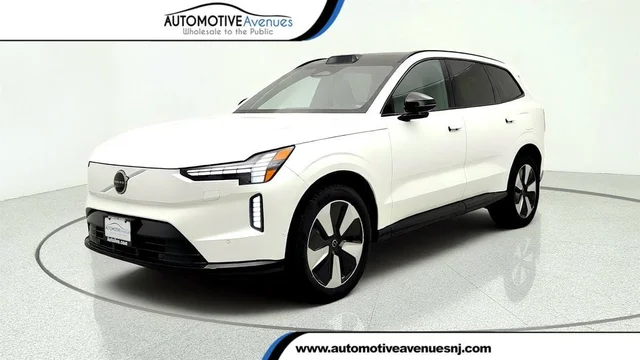
2025 Volvo EX90
Used 2025 Volvo EX90 Twin Motor Plus 6-Seater SUV
Recently sold
5 sales, $67,422–$78,825
- 2025Plus2,192 mi$69,388May 2026
- 2025Plus2,275 mi$72,025Feb 2026
- 2025Plus5,731 mi$67,422Nov 2025
- 2025Plus870 mi$78,825Nov 2025
- 2025Plus3,076 mi$67,999Jul 2025
Market trends
Voltcheck ProEX90 Used 2025 Volvo EX90 Twin Motor Plus 6-Seater SUV
Dealer description
SOPHISTICATED, ADVANCED, NO-ACCIDENT, NONSMOKER, VOLVO'S SAFEST SUV YET AWAITS! The 2025 Volvo EX90 Twin Motor Plus represents Volvo's first purpose-built electric flagship, pairing genuine three-row luxury with a safety sensor suite the brand calls the most advanced it has ever put on the road. This is an SUV built for buyers who want a fully electric family flagship without compromising on the safety reputation Volvo has spent decades building. Configured here with the 6-seat layout, featuring individual second-row captain's chairs instead of a bench, this EX90 trades outright passenger capacity for genuine comfort and easy access to the third row. WHY SHOPPERS BUY THIS MODEL The EX90 earned its place at the top of Volvo's lineup by translating the brand's safety-first philosophy directly into its first dedicated electric platform, layering cameras, radar, and ultrasonic sensors around the cabin in a way few competitors attempt. Buyers cross-shopping large electric SUVs choose the EX90 because it delivers genuine Scandinavian calm and a serene ride, rather than chasing outright performance numbers the way some rivals do. Volvo also built the EX90 around real family usability, with a spacious three-row cabin, a substantial battery pack for genuine road-trip range, and access to Tesla's Supercharger network through a NACS port. It's an SUV that asks buyers to trust Volvo's engineering rather than a flashy spec sheet, and that trust has translated into some of the strongest safety credentials in its
Questions for the seller (2)
- Battery health report The seller can pull one from the car; it's the only real degradation data, and nothing remote can measure it.
- Build date (door-jamb sticker) and original in-service date Settles mid-year running changes; the in-service date, not the model year, starts the warranty clock.